

Espinheiro-marítimo (Hipp (Hippophae rhamnoides)) é uma das frutas com maior concentração nutricional encontradas na natureza — uma pequena baga de cor laranja intensa que contém uma variedade extraordinária de vitaminas, antioxidantes e ácidos graxos, incluindo o raro ômega-7, encontrado em pouquíssimos alimentos vegetais. O suco de espinheiro-marítimo tem uma longa história de uso na Ásia Central e na Europa Oriental como um tônico sazonal para a saúde, e a ciência nutricional moderna validou muitas das propriedades tradicionalmente atribuídas a essa planta notável. Veja aqui o que o suco de espinheiro-marítimo faz, como prepará-lo em casa e como incorporá-lo à sua rotina diária. O que é o espinheiro-marítimo?
Hipp Hippophae rhamnoides é um arbusto decíduo resistente, capaz de atingir até seis metros de altura, reconhecível por suas folhas verde-prateadas e bagas laranja-vivas agrupadas densamente,. É nativo de uma vasta área geográfica que se estende da costa atlântica da Europa até a Mongólia e a China, e está particularmente adaptado a condições difíceis — solos pobres, arenosos, ou pedregosos, dunas costeiras, e invernos rigorosos. Essa resiliência é, em parte, um reflexo da extraordinária riqueza fitoquímica da planta: a sobrevivência sob estresse ambiental está correlacionada com altas concentrações de compostos protetores. As bagas amadurecem no final do verão e início do outono e devem ser colhidas com cuidado — os galhos possuem espinhos afiados e o fruto é delicado. Essa é uma das razões pelas quais o espinheiro-marítimo permanece menos popular comercialmente do que seu perfil nutricional justificaria.
Perfil nutricional: o que torna o suco de espinheiro-marítimo tão valioso
As bagas de espinheiro-marítimo estão entre as frutas mais ricas em nutrientes conhecidas. Seus principais constituintes ativos incluem:
- Vitamina C — o espinheiro-marítimo contém concentrações excepcionais de ácido ascórbico, significativamente superiores às encontradas em laranjas ou mesmo em muitas variedades de roseira-brava. Isso torna o suco de espinheiro-marítimo uma das fontes vegetais mais potentes de vitamina C disponíveis, o que contribui para o funcionamento normal do sistema imunológico, a síntese de colágeno, e a proteção antioxidante.
- Vitaminas A, E, e K — vitaminas lipossolúveis que apoiam a saúde da pele, a visão, a proteção celular, e a coagulação sanguínea, respectivamente. A combinação da vitamina E com os carotenóides que conferem às bagas a sua cor alaranjada torna o espinheiro-marítimo uma fonte antioxidante particularmente abrangente.
- Vitaminas do complexo B — incluindo B1, B2, B6, e folato (B9), que apoiam o metabolismo energético, a função do sistema nervoso, e a saúde celular.
- Ácidos graxos ômega-7 (ácido palmitoleico) — esta é a contribuição nutricional mais marcante do espinheiro-marítimo. O ómega-7 é um ácido gordo monoinsaturado encontrado em muito poucas fontes vegetais; o espinheiro-marítimo está entre as mais ricas. O ômega-7 tem sido estudado por seu papel no apoio à saúde das membranas mucosas (em todo o trato digestivo, sistema respiratório, e pele), reduzindo marcadores inflamatórios, e apoiando o metabolismo lipídico saudável.
- Ácidos graxos ômega-3, -6, e -9 — proporcionando um perfil de ácidos graxos bem equilibrado, incomum para uma baga.
- Flavonóides e antioxidantes fenólicos — incluindo quercetina, isorhamnetina, e kaempferol, que contribuem para as propriedades anti-inflamatórias e de apoio cardiovascular do espinheiro-marítimo.
- Minerais — ferro, magnésio, cálcio, e potássio estão todos presentes em concentrações significativas.
Benefícios do suco de espinheiro-marítimo para a saúde
Apoio ao sistema imunológico
O extraordinário teor de vitamina C do suco de espinheiro-marítimo é seu benefício imunológico mais imediato. A vitamina C contribui para o funcionamento normal do sistema imunológico e apoia as defesas naturais do corpo contra infecções sazonais. Combinado com a vitamina A (, que mantém a integridade das membranas mucosas — a primeira barreira contra patógenos) — e os flavonóides antioxidantes, o suco de espinheiro-marítimo oferece um perfil abrangente de apoio imunológico que o torna particularmente adequado para uso no outono e no inverno. Para um apoio imunológico sazonal adicional, explore nossos suplementos para o sistema imunológico.
Propriedades anti-inflamatórias
Os flavonóides e taninos do espinheiro-marítimo demonstraram significativa atividade anti-inflamatória em pesquisas. O consumo regular de suco de espinheiro-marítimo pode ajudar a moderar a inflamação crônica de baixo grau — um fator em uma ampla gama de condições, incluindo doenças cardiovasculares, síndrome metabólica, desconforto nas articulações, e distúrbios da pele. Os ácidos graxos ômega-7 contribuem ainda mais para essa ação anti-inflamatória, particularmente nos tecidos mucosos em todo o corpo. Saúde da pele — por dentro e por fora. A combinação de antioxidantes, ácidos graxos ômega e vitaminas A e E do espinheiro-marítimo torna-o um potente tratamento interno para a pele. Os antioxidantes neutralizam a atividade dos radicais livres que impulsiona o envelhecimento da pele; o ômega-7 apoia a integridade da membrana mucosa e pode ajudar a reduzir condições inflamatórias da pele, como eczema, acne, e psoríase; e a vitamina C apoia a síntese de colágeno — a proteína estrutural responsável pela firmeza da pele. A aplicação externa de óleo de espinheiro-marítimo (— uma preparação concentrada a partir das bagas ou sementes) — também é utilizada em cuidados com a pele devido às suas propriedades regeneradoras e nutritivas.
Saúde digestiva e intestinal
Os ácidos graxos ômega-7 e os antioxidantes presentes no espinheiro-marítimo têm sido associados ao apoio à mucosa gastrointestinal. O uso tradicional na medicina da Ásia Central incluía preparações de espinheiro-marítimo para úlceras estomacais e inflamação intestinal, e pesquisas têm explorado esses mecanismos no contexto da proteção da mucosa e da cicatrização intestinal.
Suporte cardiovascular
Os flavonóides e o perfil completo de ácidos graxos ômega do espinheiro-marítimo contribuem para o suporte à função cardiovascular normal. Pesquisas examinaram o papel potencial do espinheiro-marítimo no apoio ao equilíbrio saudável do colesterol e na proteção das paredes arteriais contra danos oxidativos. Para um apoio nutricional cardiovascular mais amplo, explore nossa coleção de antioxidantes.
Como fazer suco de espinheiro-marítimo em casa
O suco caseiro de espinheiro-marítimo é uma receita simples que requer apenas bagas frescas e água. Se você estiver colhendo suas próprias bagas, colha-as no final de agosto até outubro, quando estiverem totalmente alaranjadas e levemente macias — a colheita mais precoce rende frutos mais adstringentes, enquanto esperar pela geada pode aumentar a doçura.
Ingredientes
- Bagas frescas de espinheiro-marítimo — quantas estiverem disponíveis (400–600 g é uma boa quantidade inicial)
- Água para cobrir
- Opcional: uma pequena quantidade de mel a gosto após a extração do suco
Modo de preparo
- Lave bem as bagas em água fria corrente e remova quaisquer talos ou folhas.
- Coloque as frutas vermelhas em uma panela e adicione Enough água até cobri-las. Aqueça suavemente em fogo baixo por 15–20 minutos até que as frutas estejam completamente macias. Evite ferver vigorosamente — o calor excessivo degrada a vitamina C, que é sensível ao calor.
- Retire do fogo e deixe esfriar um pouco. Use um espremedor, um coador de malha fina, ou um pedaço de pano de musselina limpo para espremer e coar o suco, separando o líquido das cascas, sementes, e polpa. Pressione com firmeza para extrair o máximo de suco.
- Prove o suco — ele terá um sabor intensamente ácido e picante. Se desejar, acrescente uma pequena quantidade de mel assim que o líquido esfriar abaixo de 40 °C para preservar as enzimas ativas do mel.
- Transfira para garrafas ou potes de vidro esterilizados e leve à geladeira. O suco fresco pode ser conservado por 5 a 7 dias. Para armazenamento mais prolongado, congele em formas de gelo para uso em porções convenientes durante todo o inverno.
Como beber suco de espinheiro-marítimo
Comece com 30–50 ml por dia, diluídas em água ou adicionadas a um smoothie de frutas. Assim que seu corpo se adaptar, você pode aumentar para 100 ml por dia. O consumo matinal — antes ou junto com o café da manhã — é geralmente recomendado para aproveitar as propriedades estimulantes do sistema imunológico e energizantes. O suco de espinheiro-marítimo também pode ser usado como base para molhos de salada, combinado com azeite e ervas, ou misturado ao iogurte para um reforço nutricional.
Sempre escolha sucos sem adição de açúcar ou conservantes artificiais. Para quem prefere uma opção pronta, sem preparação caseira, procure suco de espinheiro-marítimo 100% puro com processamento mínimo para garantir que todo o perfil nutricional seja preservado. Navegue pela nossa coleção de verduras e superalimentos para opções complementares de alimentos funcionais.


Olvita
Olvita Óleo de espinheiro-alvar não purificado, obtido por pressão a frio - 100 ml
Preço normal €18.89Preço unitário€18.89 /100ml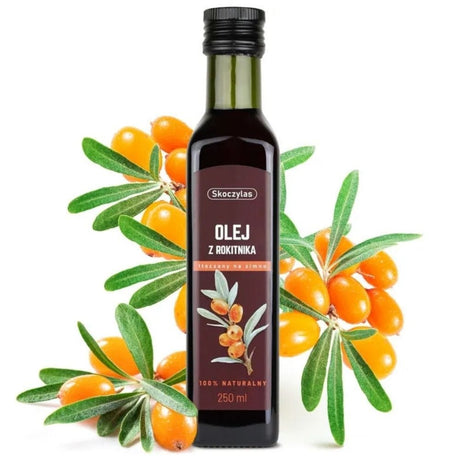

Purelab Marek Skoczylas
Óleo de Espinheiro-Marítimo Skoczylas - 250 ml
Preço normal €18.59Preço unitário€74.36 /L


Este artigo tem carácter meramente informativo e não substitui o aconselhamento médico. Em caso de problemas de saúde, gravidez, amamentação ou toma de medicamentos, consulte um médico ou farmacêutico. Os suplementos alimentares não substituem um regime alimentar variado.


